 11
11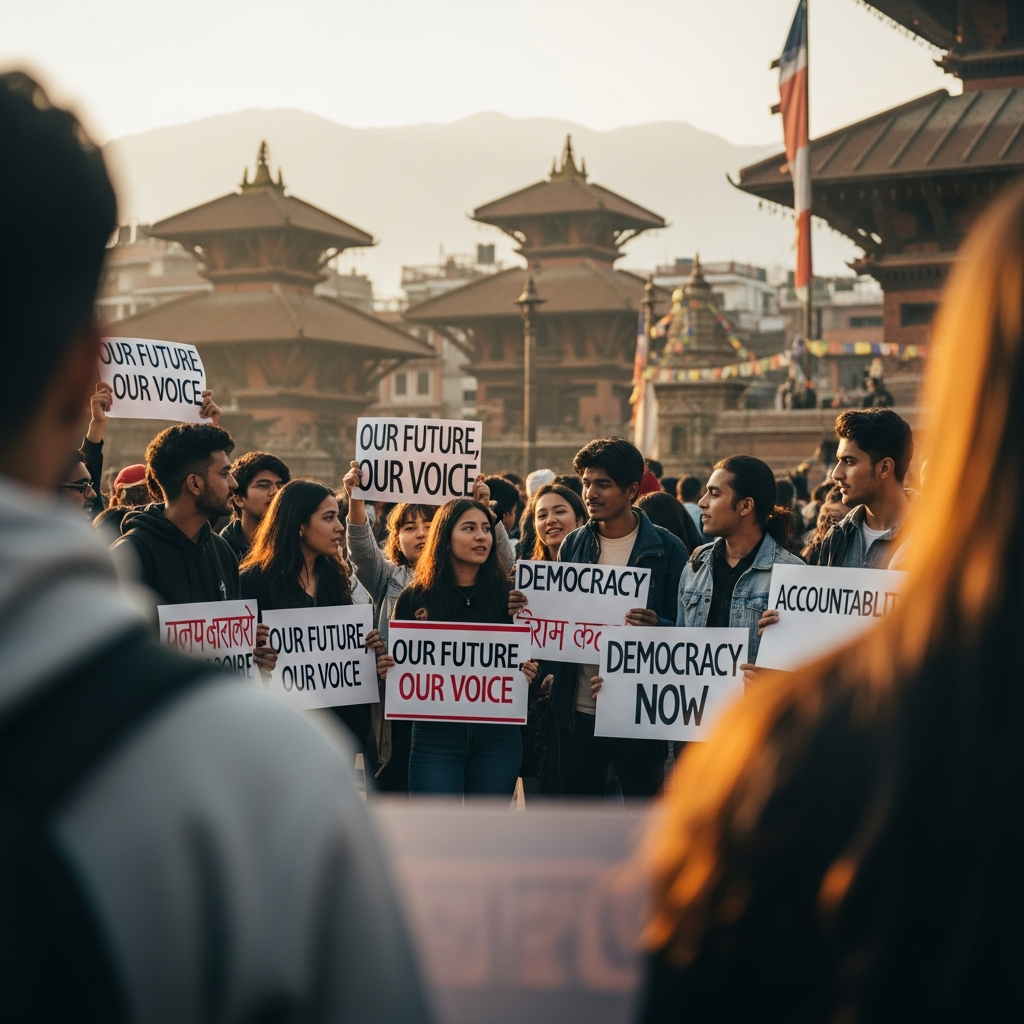
Nepal, a landlocked country nestled in the heart of South Asia, is currently undergoing a profound period of political transformation, social awakening, and economic challenge. The turbulent events of 2025 and early 2026 have fundamentally reshaped the nation’s political landscape, driven largely by relentless youth activism, deep-seated public dissatisfaction, and an uncompromising demand for systemic reform.
One of the most consequential developments in recent Nepali history is the 2026 general election, held in the wake of a severe political crisis. The friction began in 2025 when the former government enacted a controversial ban on social media platforms. Rather than quelling dissent, the ban acted as a catalyst, triggering massive, youth-led protests against entrenched corruption and a severe lack of domestic opportunities.
The sheer scale of these protests ultimately forced the resignation of the government and necessitated the formation of an interim administration. The general elections, held on March 5, 2026, marked a decisive turning point as new, anti-establishment political forces emerged from the fray.
A highly notable development during this period has been the meteoric rise of Balendra Shah (Balen). A former rapper turned political leader, Balen has become the ultimate symbol of a national shift toward unconventional leadership and a rejection of traditional, establishment politics.
The “Gen Z” movement has cemented itself as a defining feature of Nepal’s recent history. Young citizens took to the streets not just over policy disagreements, but over systemic rot, specifically targeting corruption, chronic unemployment, and blatant political nepotism. This movement not only successfully toppled a government but essentially forced a constitutional and political reset.
Amidst the political upheaval, Nepal has also seen quiet but significant progress in social inclusion. Notably, the election of the first transgender woman to parliament marks a historic milestone for LGBTQ+ representation and human rights within the conservative South Asian region.
Despite the political victories, Nepal’s economy continues to grapple with severe structural issues. High youth unemployment remains the most pressing concern, driving a massive “brain drain” as skilled workers migrate abroad in search of better prospects. Furthermore, the unequal distribution of resources across the country continues to hinder equitable growth.
Global economic uncertainty has compounded these domestic pressures, making it difficult for the interim and newly elected leaders to maintain financial stability during the transition. However, economists and experts suggest that the current political reset provides a rare opportunity. With better governance, targeted infrastructure development, and sweeping policy reforms, Nepal holds the potential to vastly transform its economic fortunes.
Situated strategically between global heavyweights India and China, Nepal’s foreign policy is inherently delicate. Recent events have repeatedly highlighted this sensitivity. For instance, an ongoing investigation into the public burning of a Chinese leader’s book by demonstrators has raised sudden diplomatic concerns.
Furthermore, the internal political instability has created uncertainty among international observers regarding Nepal’s traditional, long-held policy of non-alignment. As new leadership takes the helm, Nepal must continue the intricate balancing act of managing relationships with major powers while fiercely safeguarding its sovereignty.
Away from the capital’s political theater, the country faces tangible, everyday challenges. Several recent transport accidents, including a tragic helicopter crash, have brought renewed attention to the country’s ongoing infrastructure deficits and pressing aviation safety concerns.
On a macro level, regional trade dynamics are rapidly evolving. Neighboring countries are increasingly seeking stronger, modernized economic ties with Nepal, recognizing the strategic and economic value of a stable, newly reformed Himalayan nation.
Nepal stands at a critical crossroads. The potent combination of youth activism, political restructuring, and economic necessity is actively forging a new future for the country. While the threat of instability remains a valid concern, the developments of 2025 and 2026 undeniably offer a profound sense of hope for a more transparent, inclusive, and progressive Nepal.